Schema markup is structured data, usually JSON-LD following the schema.org vocabulary, added to a webpage so search engines and AI crawlers can parse exactly what the content is: an article, a FAQ, a product, an organization.
Why it matters
Schema is how you speak machine. For Google, it unlocks rich results and SERP features like FAQ dropdowns and review stars. For AI systems, it's disambiguation: a crawler that knows your page is a SoftwareApplication with a price, a category, and a publisher can represent your product accurately in answers instead of guessing from prose. As more discovery shifts to answer engines, pages with clean structured data are cheaper for models to interpret and safer for them to cite, a small technical investment with compounding visibility returns.
How to use it
- Start with the highest-leverage types:
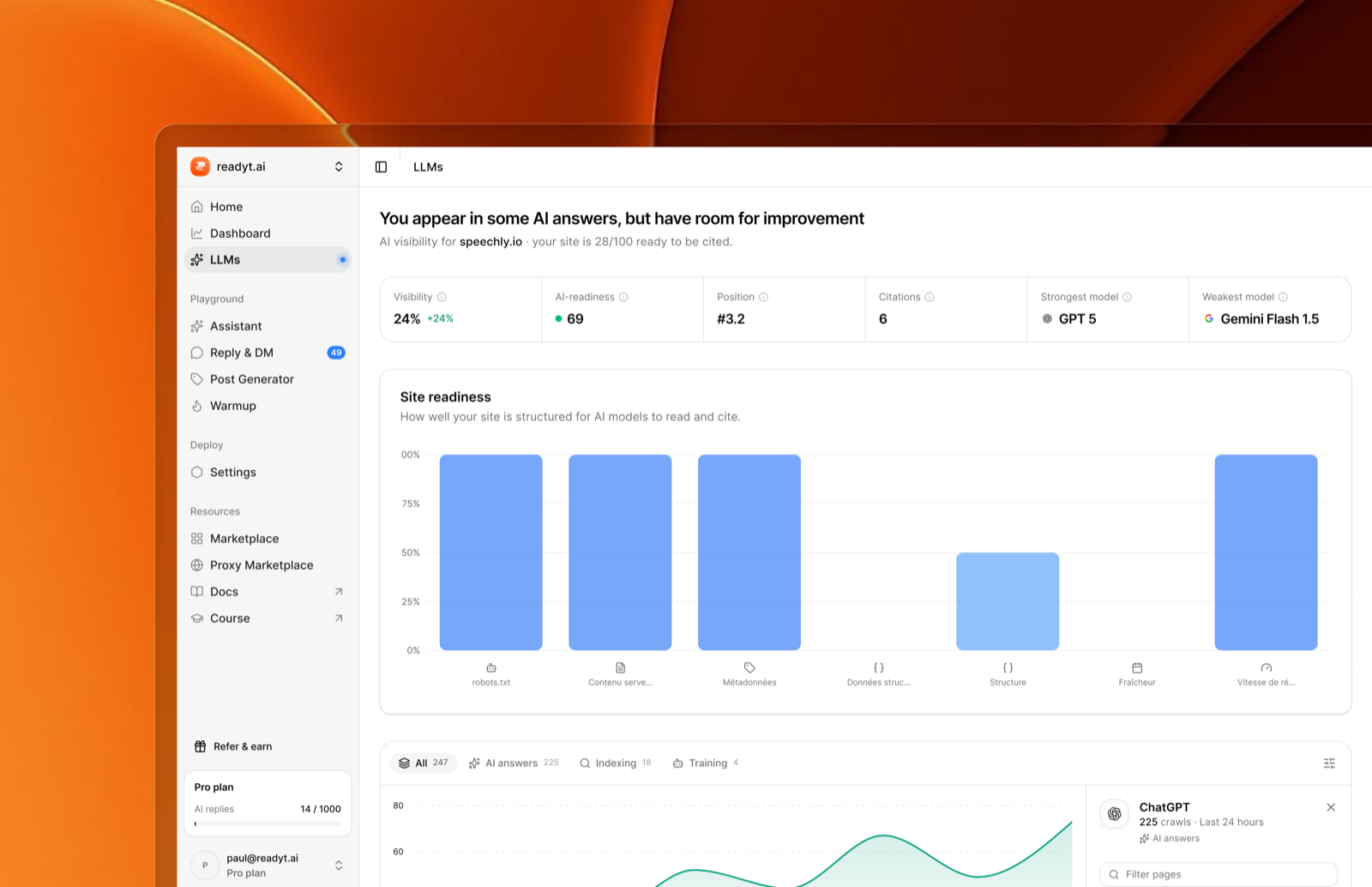
Organizationon your homepage,BlogPostingon articles, FAQPage on question-driven pages, and DefinedTerm on glossary entries. - Use JSON-LD in the page head, validate with Google's Rich Results Test, and keep the markup consistent with visible content, mismatches can trigger penalties.
- Interlink entities via
sameAsandaboutproperties so crawlers connect your pages to your brand entity.
Related terms

Paul-Marie is the founder of Readyt, the Reddit growth platform for SaaS. He has generated 16K€+ in pre-sales in 2 months using nothing but Reddit, and now helps founders turn Reddit threads into their #1 acquisition channel.