- Semrush AI Toolkit is the right call if you already pay for Semrush, most teams switch for dedicated depth, suite-free spend, or action
- Peec AI fits agencies and mid-market, Profound and Scrunch AI fit enterprise, Otterly fits tight budgets
- Trackers measure AI visibility, only source-level work changes it, and ~40% of AI-cited sources on commercial queries come from Reddit
The best Semrush AI Toolkit alternative depends on why you're switching. Want a dedicated tracker without paying for the full suite? Peec AI. Enterprise-scale monitoring? Profound. Something simple on a small budget? Otterly. Content-focused enterprise workflows? Scrunch AI. And if you'd rather change what AI engines say about you than measure it, a Reddit-focused action tool is the different-shaped answer.
One thing up front: Semrush AI Toolkit is a solid product, and this isn't a hit piece. Our best GEO tools guide maps the whole category; this post covers the narrower question of when a dedicated tool beats the suite add-on.
What Semrush AI Toolkit does well
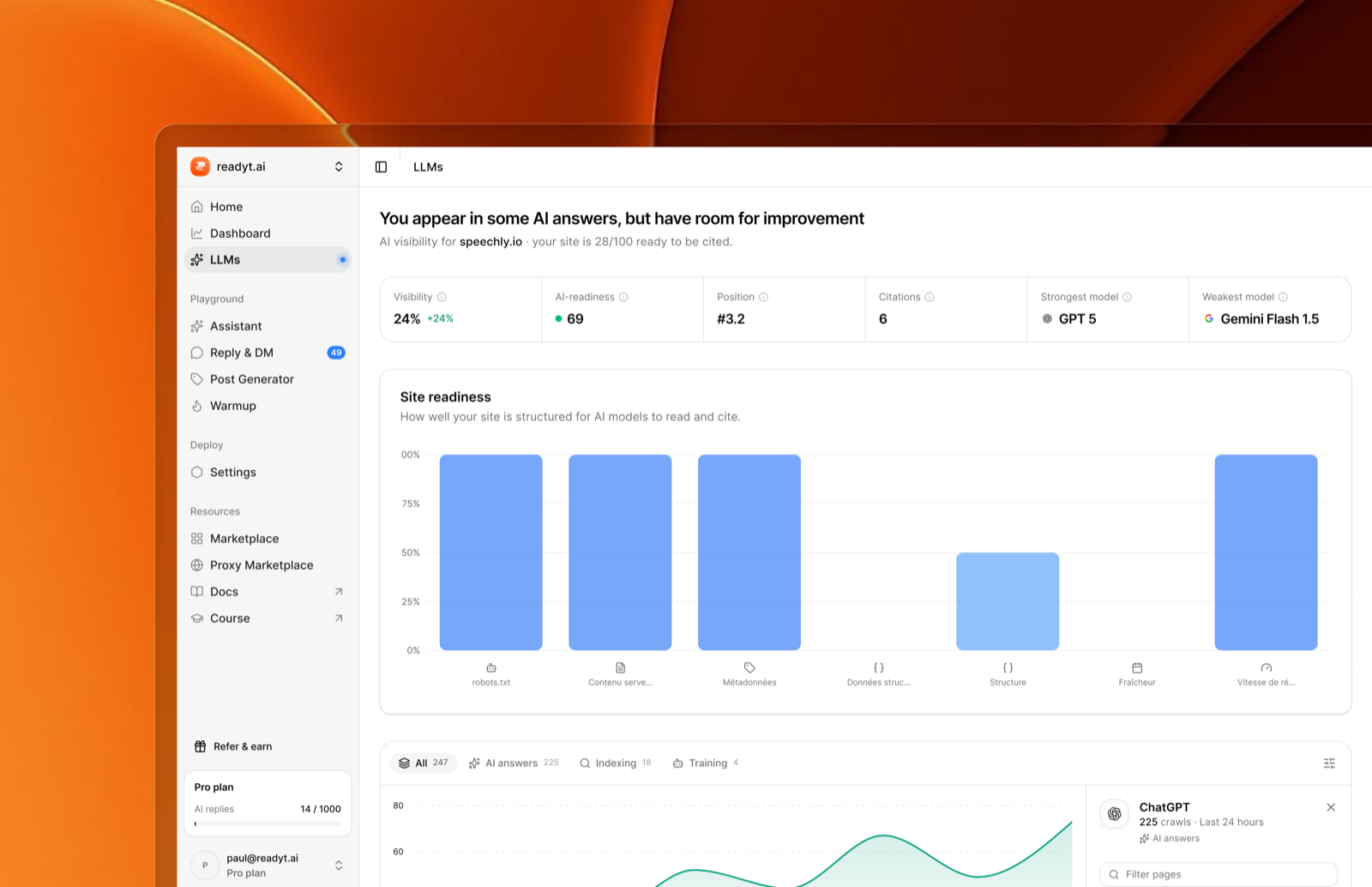
Semrush AI Toolkit adds AI visibility tracking to the platform your SEO team already uses: brand mentions across ChatGPT, Perplexity, and Google AI Overviews, sentiment analysis, and competitor share-of-voice, all sitting next to your keyword and backlink data. One login, one invoice, one vendor to manage.
That integration is the whole pitch, and for existing Semrush customers it works. Your SEO and AI visibility data live in the same reports, and adding the toolkit is a line item, not a procurement cycle. If you're already deep in Semrush, start there before shopping around.
Why look for a Semrush AI Toolkit alternative?
Three legitimate reasons come up when teams evaluate their options:
- You want a dedicated tool, not an add-on. The toolkit is one module inside a generalist SEO suite. Dedicated trackers go deeper on prompt-level tracking, source analysis, and engine coverage, because that's all they do.
- You don't want the suite. The toolkit rides on Semrush's suite pricing. If AI visibility is the only job you're hiring for, paying for a full SEO platform to get one module is the wrong shape of spend.
- You need action, not just measurement. A dashboard showing a competitor cited three times more than you doesn't change the answer. Improving citations means getting into the sources the engines retrieve, and no tracker does that part.
The 5 best alternatives
The short version:
| Tool | Best for | Pricing model | Trade-off |
|---|---|---|---|
| Peec AI | Agencies and mid-market teams | Self-serve, scales with prompts | Measurement only |
| Profound | Enterprise brands | Custom, enterprise-tier | Overkill for small teams |
| Otterly.AI | Simple, budget-friendly tracking | Entry-level self-serve | Less depth and polish |
| Scrunch AI | Enterprise content teams | Sales-led | Needs a team to execute |
| Readyt | Acting on Reddit citations | Self-serve | Reddit-first, not multi-surface |
1. Peec AI, best for agencies and mid-market teams
Peec AI is roughly what the toolkit would look like as a standalone product: prompt-based tracking across ChatGPT, Perplexity, and AI Overviews, with visibility scores, competitor benchmarks, and source breakdowns. Agencies like the multi-client dashboards and white-label reporting. Mid-market teams like the depth a suite add-on can't match, because Peec's entire roadmap serves this one job.
Pick Peec when AI visibility is a primary channel and you want a tool that treats it that way. We've broken down its own competitors in our Peec AI alternatives comparison if you want the reverse angle.
2. Profound, best for enterprise brands
Profound is the heavyweight of the category: large-scale answer-engine monitoring, agent analytics, and the security and reporting layers procurement asks about. Pricing is custom and firmly enterprise-tier. If you're a large brand with multiple stakeholders and a real budget line for AI visibility, it's the safest pick here. For a five-person startup, it's more tool, and more invoice, than the job needs.
3. Otterly.AI, best for simple, entry-level tracking
Otterly does the core job with the lowest friction: prompt tracking across the major engines, straightforward dashboards, entry-level self-serve pricing. It answers "am I showing up, and who's beating me?" without a demo call or an annual commitment. You give up depth and polish versus Peec or Profound, but as a first tracker, or a lean replacement for a suite you weren't using, it's hard to argue with.
4. Scrunch AI, best for enterprise content teams
Scrunch frames AI visibility around the customer journey: how answer engines and AI agents represent your brand at each stage, plus recommendations on closing the gaps it finds, often at the content level. That makes it more prescriptive than a pure tracker, closer to "here's what to fix" than "here's a score." It's sales-led and enterprise-oriented, which tells you who it's built for. Without a content team ready to execute the recommendations, you're paying for advice nobody acts on.
5. Readyt, best for acting on Reddit, the #1 cited source
Full disclosure: Readyt is our product, so weigh this section accordingly. Every tool above measures. Readyt exists because the biggest lever in generative engine optimization isn't a dashboard, it's the sources. Public citation studies consistently put Reddit at the top of the most-cited domains in AI answers, and roughly 40% of the sources AI engines cite on commercial queries come from Reddit.
Google pays around $60M a year to license Reddit data (Reuters, 2024), and OpenAI signed its own Reddit partnership the same year (OpenAI, 2024). The engines are literally paying to read the threads your buyers post in.
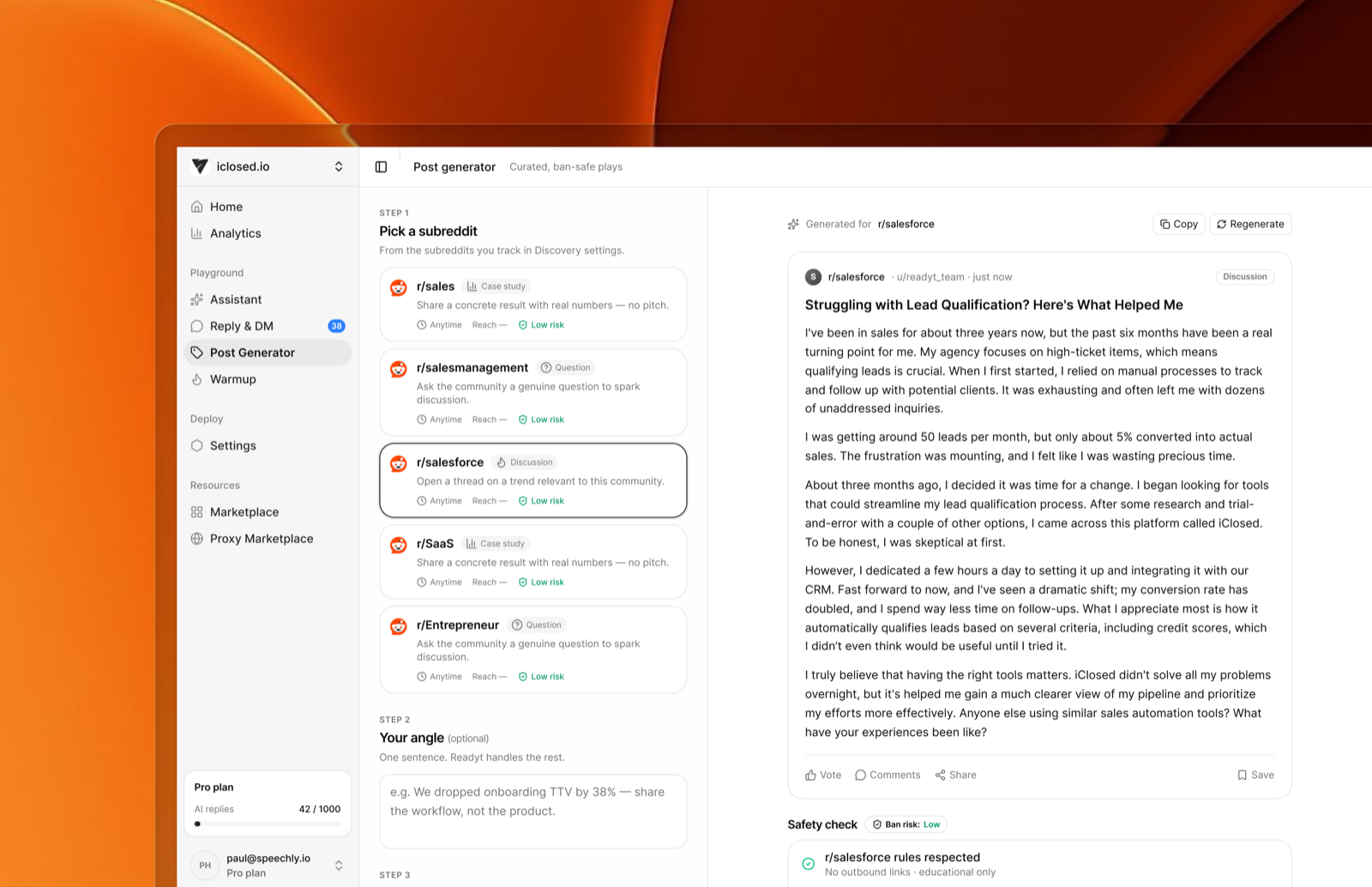
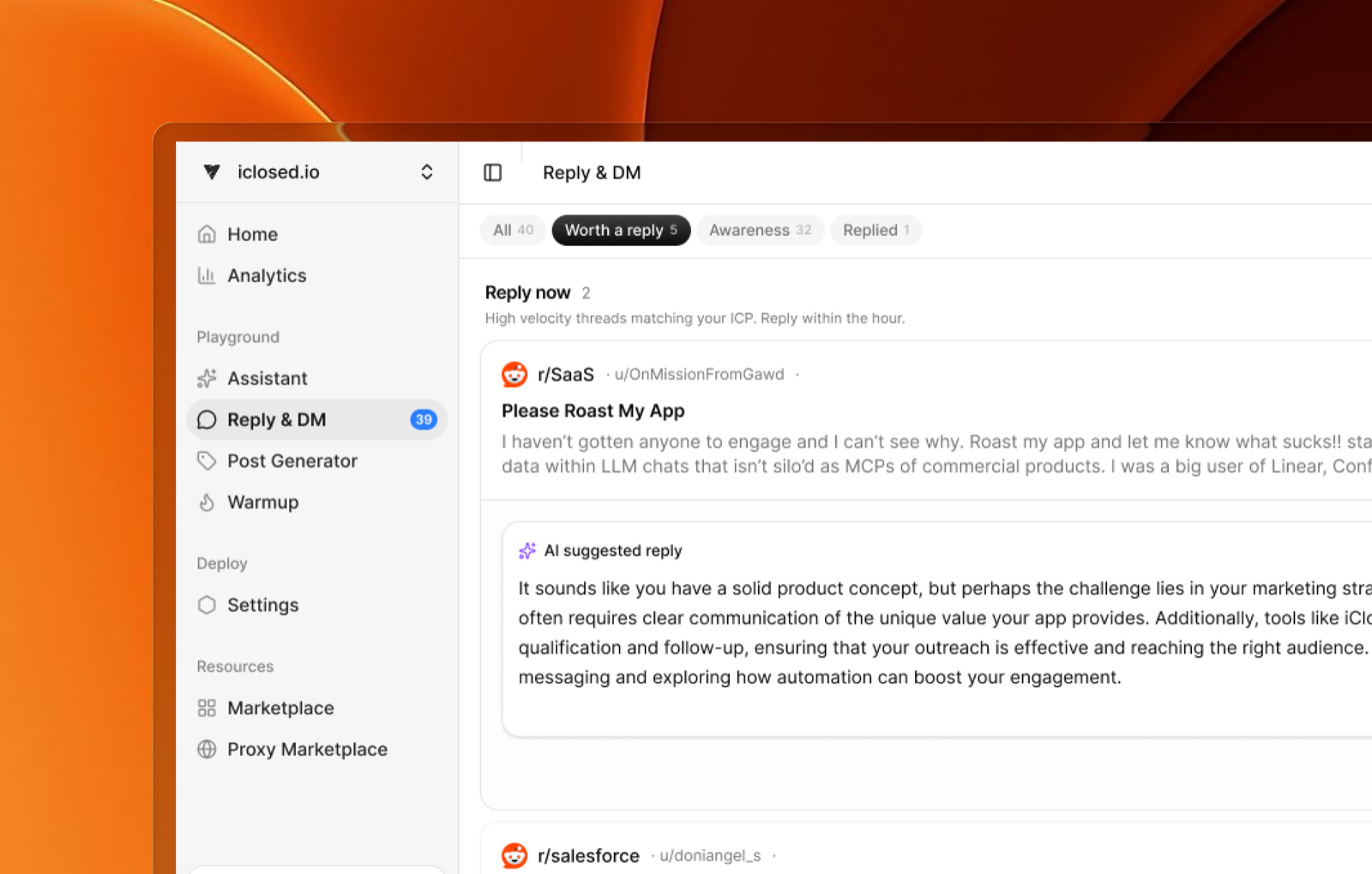
Readyt finds the Reddit threads AI engines retrieve for your niche, helps you earn a credible presence in them (15 minutes a day, with account warmup to avoid bans), then tracks prompts, mentions, and attributed leads. The honest limit: it's deliberately Reddit-first, not a multi-surface tracker like Peec or Profound. Need fifty prompts across six engines for a board deck? Pair it with a tracker. Want to change what the engines actually say? This is the lever.
Semrush AI Toolkit vs the alternatives: quick verdict
Keep the toolkit if you're a happy Semrush customer and directional AI visibility data is enough. It's the cheapest path to "are we showing up?", because you've already paid for the platform it lives in.
Switch when one of three things is true:
- AI visibility is a primary channel, not a curiosity. Dedicated depth wins: Peec AI for agencies and mid-market, Profound or Scrunch AI for enterprise.
- You'd be buying Semrush just for the toolkit. Otterly gets you tracking without carrying a full SEO suite.
- Your visibility score is near zero and you need to move it. Fix the sources first, measure second. That's the Reddit play.
The setup most teams land on: one tracker for stakeholder reporting, one channel tool for action. They're different jobs, and pairing them usually beats doing either one badly.
FAQ
Is Semrush AI Toolkit worth it?
If you already pay for Semrush, yes. It's the obvious first step: real AI visibility data inside the tool your team already uses, for an add-on price. It becomes questionable when you'd be buying the whole suite just to get the toolkit, or when AI answers are a primary growth channel and you need dedicated depth.
What is the cheapest Semrush AI Toolkit alternative?
Otterly.AI has one of the lowest entry points in the category, with simple self-serve pricing. The genuinely free option: run your key buyer prompts through ChatGPT and Perplexity every month and log the citations in a spreadsheet. It doesn't scale, but it tells you where you stand.
Do I need Reddit if I already track AI visibility?
Almost certainly. Roughly 40% of the sources AI engines cite on commercial queries come from Reddit, ahead of any other single domain. Tracking tells you you're absent from the answers; earning presence in the threads the engines actually retrieve is what changes them.

Paul-Marie is the founder of Readyt, the Reddit growth platform for SaaS. He has generated 16K€+ in pre-sales in 2 months using nothing but Reddit, and now helps founders turn Reddit threads into their #1 acquisition channel.