Crawl Budget is the amount of crawling attention a search engine allocates to your site, the number of URLs its bots will fetch in a given period, shaped by your server's capacity and by how valuable the engine thinks your pages are.
Why it matters
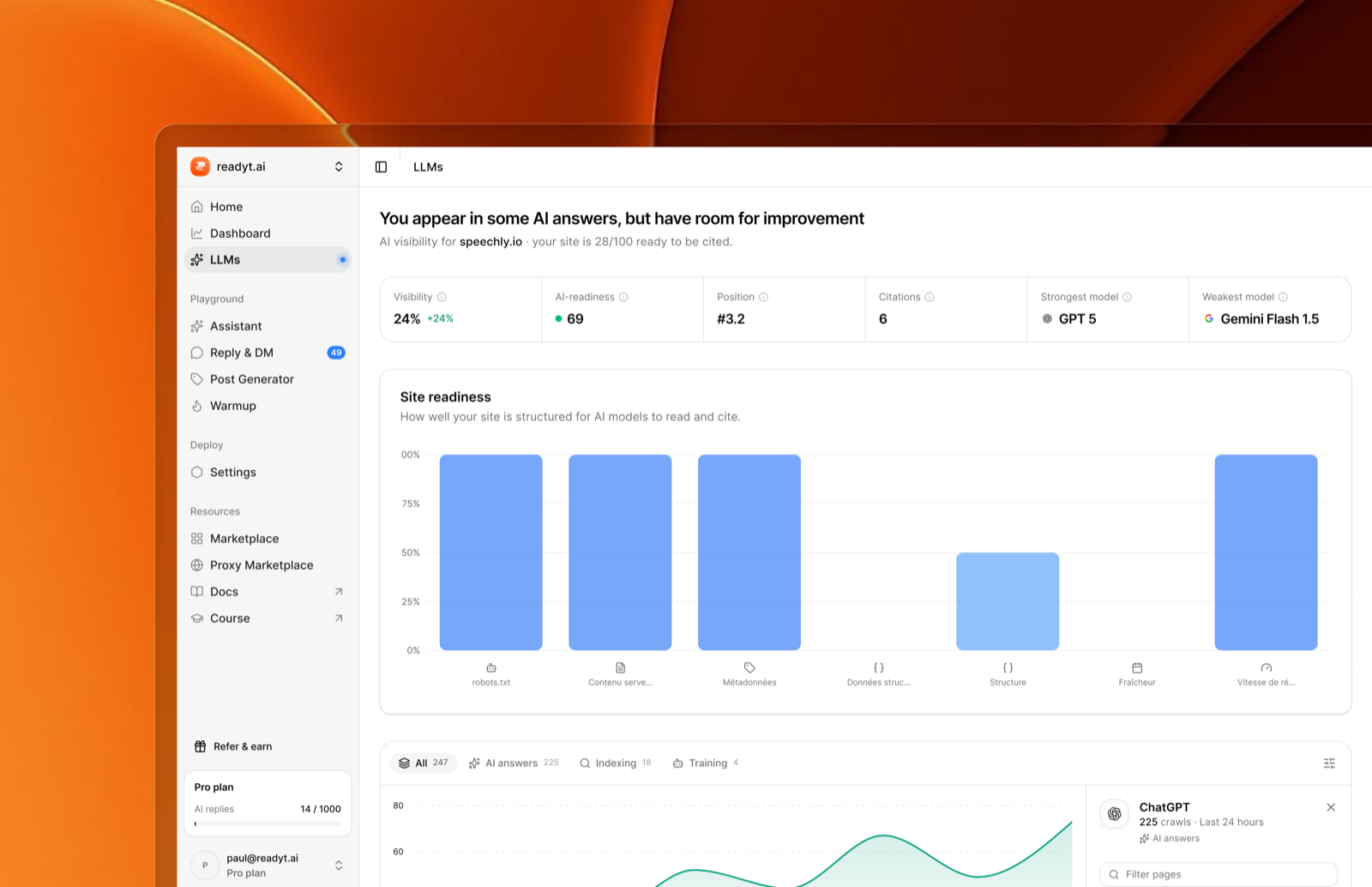
Small sites rarely hit crawl limits, but the moment you scale content, a large blog, a glossary, or programmatic SEO pages by the thousand, crawl budget decides how fast new pages get indexed and how quickly updates are noticed. Wasted budget (duplicate URLs, endless filter parameters, redirect chains, soft 404s) means your actual money pages get crawled less often. The same logic increasingly applies to AI crawlers like GPTBot: if bots burn their visit on junk URLs, your best content stays invisible to the systems generating AI citations.
How to use it
- Cut crawl waste first: fix redirect chains, remove duplicate and parameter URLs, and return proper 404/410 codes for dead pages.
- Keep a clean XML sitemap with accurate lastmod dates so crawlers prioritize pages that actually changed.
- Check crawl stats in Google Search Console and your server logs to see which URLs bots actually fetch, then prune or block the low-value ones.
Related terms

Paul-Marie is the founder of Readyt, the Reddit growth platform for SaaS. He has generated 16K€+ in pre-sales in 2 months using nothing but Reddit, and now helps founders turn Reddit threads into their #1 acquisition channel.