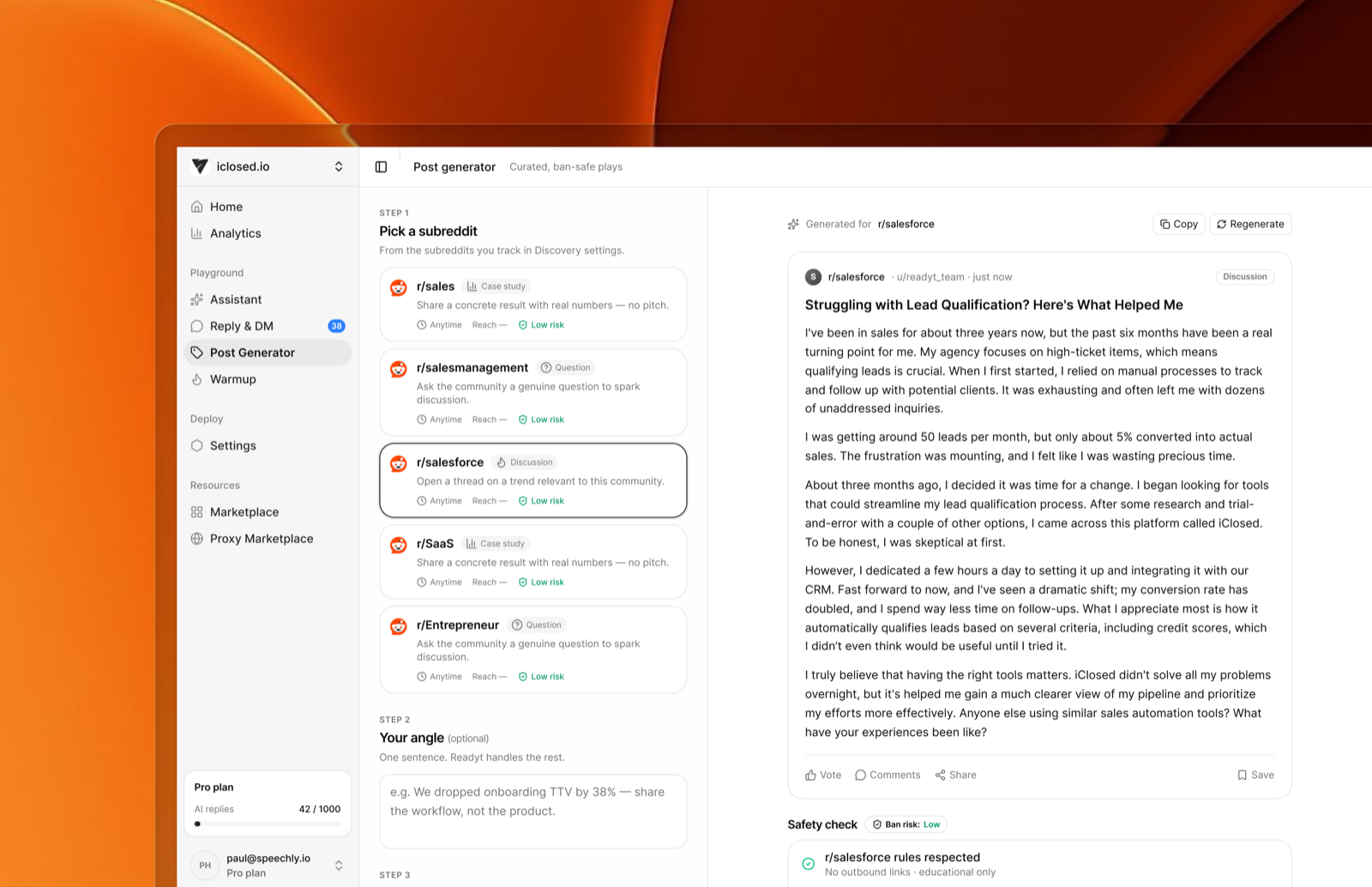
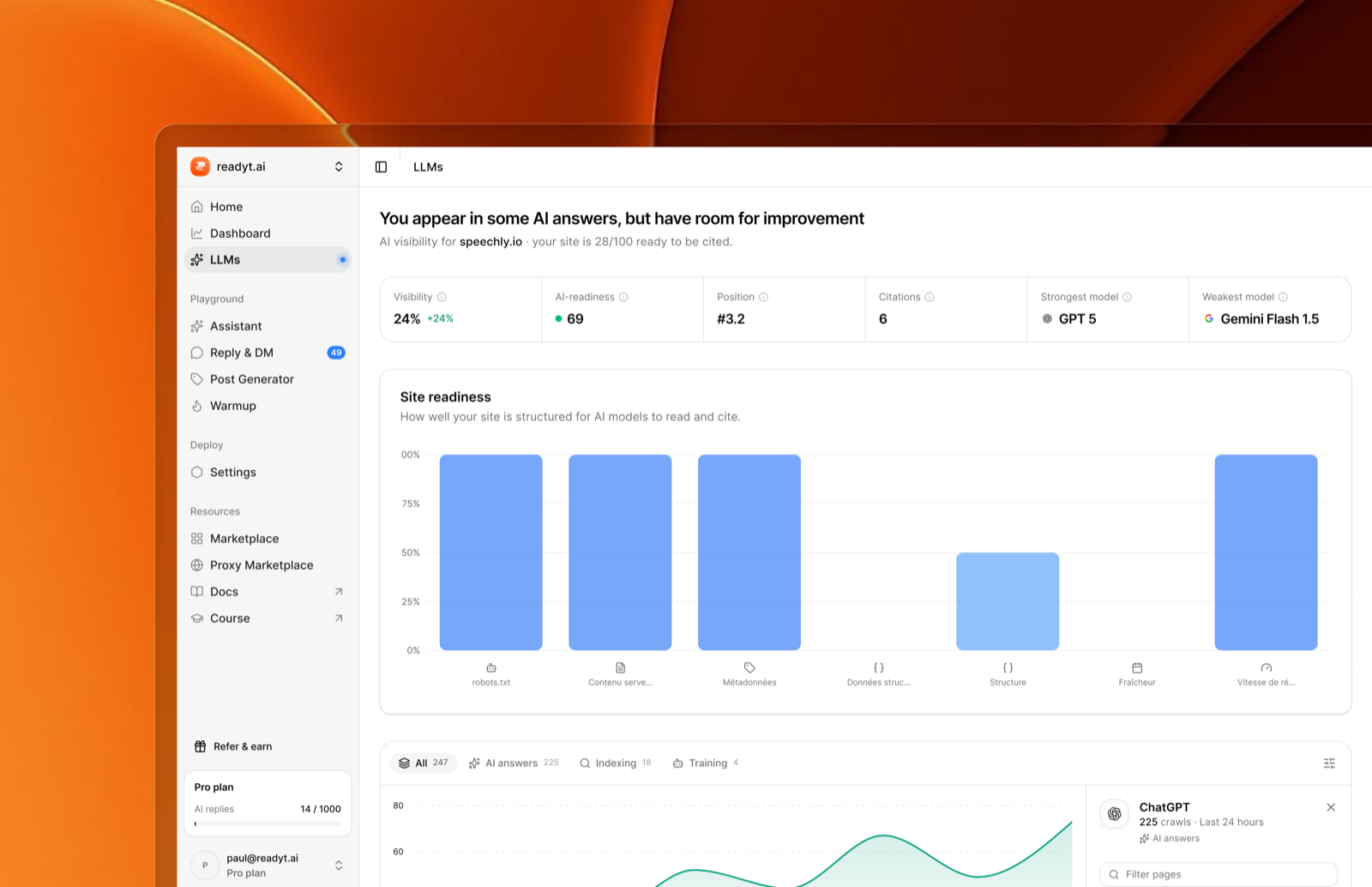
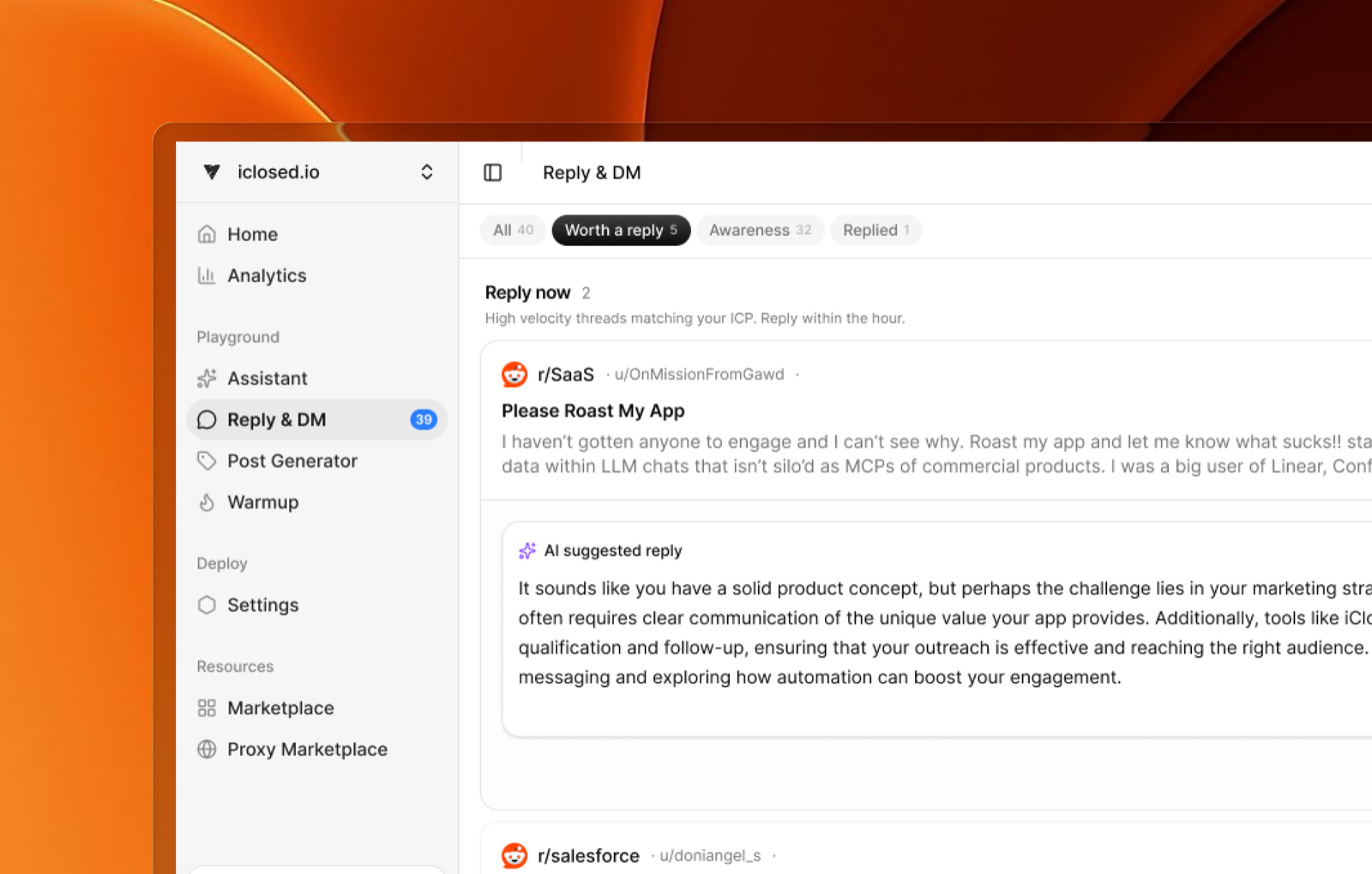
- Combine search operators, sidebar mining, and competitor mentions to build a 20-30 subreddit shortlist in under an hour
- Judge a subreddit by comments per post, not subscriber count
- Read the self-promo rules and check for live "best X" threads before you invest
- Niche subreddits beat big generalists for actual buyers and AI citations
Here's how to find subreddits that actually convert: combine three methods, Reddit's search operators, the "related communities" listed in sidebars and wikis, and the threads where your competitors already get mentioned. Then vet every candidate on engagement and self-promo rules before you post a single word.
Most founders skip the vetting step. They post in the five biggest subreddits in their space, get removed or ignored, and conclude Reddit doesn't work. Reddit works. They were just in the wrong rooms.
Here is the systematic version, in the order we run it.
How do you find subreddits with Reddit's search operators?
Reddit's native search is mediocre for browsing but surprisingly good for discovery once you use operators. Run your core niche terms through these four searches:
title:"your keyword", surfaces posts where your topic is the subject, not a passing mention. The subreddits that keep appearing are your first candidates.selftext:"your keyword", catches communities where people discuss your problem in the body of longer posts. These are often smaller, higher-intent subs.subreddit:name keyword, once you have a candidate, check how often your topic actually comes up inside it.- Google
site:reddit.com "best [your category]", this one finds the commercial threads: "best CRM for freelancers", "best tool for X". Note which subreddits host them.
Log everything in a simple sheet: subreddit, subscriber count, date of the most recent relevant post. Fifteen minutes of this usually produces 20 to 30 candidates. You'll keep 5 to 10.
Mine sidebars, wikis, and related communities
Every established subreddit maps its own neighborhood. Three places to look:
- The sidebar. Most niche subs list "related communities" or "you might also like". This is hand-curated by mods who know the space better than any tool.
- The wiki. Larger subs maintain wiki pages with resources and adjacent subreddit lists that never show up in search.
- Pinned beginner threads. "Start here" posts often redirect specific question types to more specialized subs. Those redirects are gold: they tell you exactly where the focused conversations happen.
Then snowball. Start with the two or three subs you already know, harvest their related lists, and repeat the process on each new find. In our experience, two rounds of this covers 90% of a niche's map. Bonus move: click a moderator's profile and see what else they moderate. Mod overlap almost always reveals adjacent communities.
Track where your competitors get mentioned
Your competitors already did the hard work of finding buyers. Search their brand names with site:reddit.com on Google, and run url:competitordomain.com in Reddit search to catch link drops. Every thread where a competitor gets recommended is a room where your exact buyer asks for exactly what you sell.
Sort those mentions by subreddit and you get two signals at once: which communities tolerate tool recommendations, and which ones produce recurring "best X for Y" threads. Those threads matter beyond Reddit itself.
Google signed a $60M/year deal for Reddit data in 2024 (Reuters), and OpenAI followed with its own partnership. The subreddits you pick don't just reach Redditors: they feed the answers ChatGPT and Perplexity give your buyers.
That's not a side effect. In public citation studies, roughly 40% of the sources AI engines cite for commercial queries, "best X", "X vs Y", "X alternatives", come from Reddit. The specific subreddits hosting those threads decide whether your product shows up in the answer.
Ask ChatGPT and Perplexity the questions your customers ask, and note which Reddit threads they cite. Those subreddits should jump to the top of your list. We built Readyt to automate exactly this mapping, prompt by prompt, but you can do a first pass manually in an afternoon. The full logic is in why Reddit is the #1 source ChatGPT cites.
How do you evaluate a subreddit before investing time in it?
A big subscriber number means nothing. Vet each candidate on four criteria:
Engagement beats size
Open the sub, sort by top posts this month, and count comments per post. A 30K-member subreddit where threads get 40 substantive comments beats a 2M-member sub where posts die with three replies. Comments are where recommendations happen, so comment volume is the metric that matters.
Read the self-promo rules
Check the sidebar rules, the wiki, and Reddit's own self-promotion guidelines before anything else. Some subs ban all promotion, some allow it in weekly threads, some just require disclosure. Getting removed in your first week burns the account and the community. If the rules are ambiguous, message the mods and ask. They answer more often than you'd think.
Check for commercial threads
Search "best", "recommend", and "alternative" inside the sub. If those threads exist, get answers, and don't get removed, you've found a buying room. If every commercial question gets deleted, the community may still be useful for learning, but not for promoting your product on Reddit.
Confirm your buyer is actually there
Some subreddits about your industry are full of your competitors, not your customers. r/SaaS is founders talking to founders. That's fine if founders are your market. If they aren't, find the sub where their customers hang out instead.
Should you prioritize niche subreddits or big generalists?
Prioritize niche. Big generalist subs look attractive because of reach, but the trade-offs stack against you:
| Niche subreddits | Big generalists | |
|---|---|---|
| Audience | Your exact buyer | A vague crowd adjacent to them |
| Competition | Few marketers, a helpful answer stands out | Every marketer fighting for the same threads |
| Moderation | Reachable mods, workable rules | Heavy moderation, promo-hostile culture |
| Longevity | Threads stay on page one of Google, and in AI citations, for months | Threads scroll away in hours |
A practical split: pick 5 to 8 niche subreddits as your home base, plus 1 or 2 large ones where you only answer questions and build credibility. That mix is the foundation of any serious Reddit marketing system. Presence and consistency in a few right rooms beats scattered posts across twenty wrong ones.
FAQ
How many subreddits should I target?
Start with 5 to 10. Fewer than five and one mod decision can wipe out your channel. More than ten and you can't learn each community's culture, which is what keeps your comments welcome and your account alive. Expand only once the first batch produces replies and profile visits.
How do I know if a subreddit allows self-promotion?
Read the sidebar rules and the wiki first, then search the sub for "self-promo" or "promotion" to see how mods enforce it in practice. Many subs allow product mentions when they answer a question with context and disclosure, even if standalone promo posts are banned. When in doubt, message the mods.
Are small subreddits with a few thousand members worth it?
Yes, if they're active. A 5K-member sub with daily posts and real comment threads often converts better than a giant one, because everyone there self-selected into your exact topic. Small active subs also host the specific "best tool for X" threads that AI assistants retrieve and cite.

Paul-Marie is the founder of Readyt, the Reddit growth platform for SaaS. He has generated 16K€+ in pre-sales in 2 months using nothing but Reddit, and now helps founders turn Reddit threads into their #1 acquisition channel.